Mike Bender knew The Most Serious Fart could make a room full of children laugh. He had seen it happen at school readings, while illustrator Chuck Dillon watched families stop at the book’s title at comic conventions. Getting the story onto a movie screen proved harder. At Utopai Studios, AI-assisted production is creating work for artists on a film that traditional studios had passed on. Today, Bender is directing the animated feature, Dillon is shaping its visual world, and a team of artists is bringing it to life.
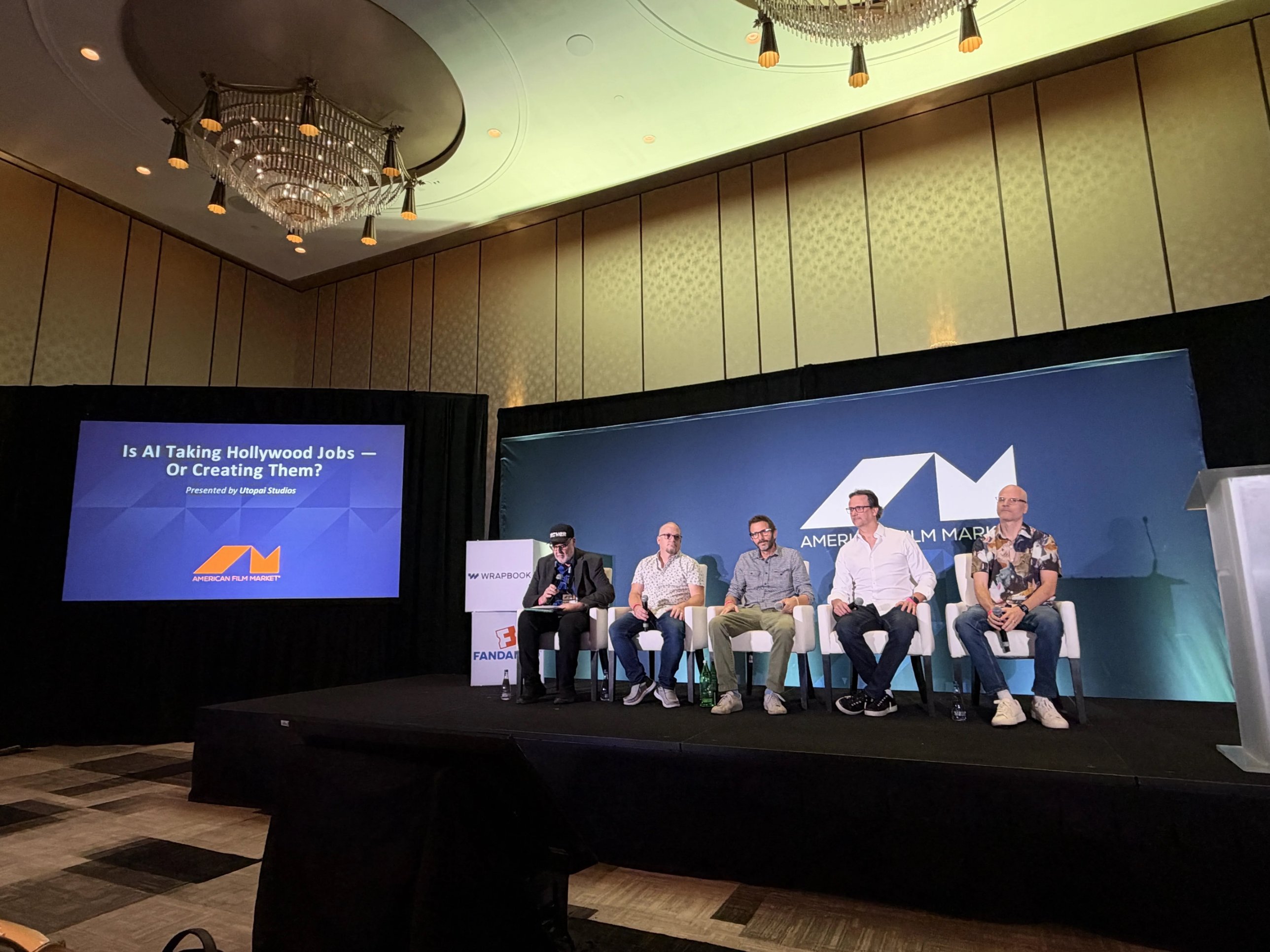
The film became a central thread in Is AI Taking Hollywood Jobs or Creating Them?, a panel presented by Utopai Studios at the American Film Market in Los Angeles on November 12, 2026. Moderated by Dan Sarto, co-founder and publisher of Animation World Network, the conversation brought together Bender and Dillon with Carsten Kurpanek, our Head of Production, and Carlos Lutterbach, our Head of Animation. Their discussion explored the decisions behind the film, from saying yes to an unusual story to building a production around the people creating it.
Bender’s idea began with a world that seemed increasingly serious. He wanted to write a children’s book about holding onto a sense of humor. A fart offered a humble, everyday reminder to take ourselves a little less seriously.
The book gave Bender and Dillon regular opportunities to see that idea connect with readers. Bender recalled the immediate attention he received when announcing the title during school visits. Dillon saw the same curiosity at conventions, where laughter often brought people over to learn more.
The film pitch generated a similar response. According to Bender, he and producer Russell Hollander took the project to every traditional animation studio in town. The meetings went well, but follow-up conversations repeatedly ended with the concern that an original fart movie was too risky.
Bender eventually heard about Utopai on LinkedIn and sent a message. Within 24 hours, he was invited to pitch our CEO. Lutterbach remembered hearing a story with humor, heart, and a structure clear enough that he could picture the film. He also pointed to the short distance between artists and studio leadership, allowing the people making creative decisions to hear the idea directly.
Bender’s involvement continues through his roles as writer and director. Dillon, the book’s illustrator, serves as the film’s creative art director and designs its characters. Both spoke about the experience of helping their original work take shape in a different medium.
For Dillon, characters that began in his sketchbooks are becoming three-dimensional figures that can move and speak. That translation requires choices about how a drawing reads from different angles and how the character moves. His role includes developing the artwork and guiding those choices as the film’s visual identity takes shape.
Bender has remained closely involved throughout the production. Our team treats his screenplay as a shoot-ready script, while making room for collaborators to contribute ideas that strengthen it. “I think I’ve been allowed to play more here with this story than I ever have before,” he said.
Bender also made clear that protecting his vision leaves room for collaboration. He welcomes the imagination of the artists around him and spoke about that exchange as one of the joys of the project. His story provides a shared direction for a team bringing its own experience and ideas to the film.
The panel’s question about jobs became concrete in the discussion of who is making the movie. At the time of the conversation, Kurpanek said a team of seven or eight storyboard artists was boarding the entire film through a traditional process. Bender compared the experience to collaborating with a room of writers, with each artist helping develop the story visually.
Our AI filmmaking team, led by creative director Daniel Ma, brings experience in animation, VFX, and filmmaking. Kurpanek explained that their work requires decisions about how a scene is staged and how its characters perform. The artists draw on their understanding of filmmaking to help turn a director’s intentions into finished images.
Bender and Lutterbach also get on a call with every artist joining the production. Those conversations give new collaborators a chance to understand the film’s themes and the enthusiasm behind it.
Lutterbach emphasized the importance of a working environment where people feel comfortable offering an idea that might not work. An imperfect suggestion can lead to a useful one. He wants the crew to have room to experiment together and enjoy the process.
Lutterbach explained how our team approaches the relationship between craft and technology. The starting point is what the filmmakers want to achieve in a scene. “Every technical decision comes out of a creative question,” he said.
Dillon’s character work offers a practical example. The film’s look develops from his drawings, and some designs require additional views or color work to communicate their form. Dillon spoke about creating turnarounds when a drawing did not provide enough information to translate a character into three dimensions.
Lutterbach explained that Dillon can speak directly with the artist producing a rendered image and guide adjustments. The production also allows the team to revisit scenes as their elements develop, giving the director opportunities to refine an idea later in the process.
Kurpanek and Bender both emphasized the creative judgment involved. A finished shot requires thought about what a character is doing and whether the action serves the story. Lutterbach said the team’s daily conversations focus on improving the film, down to the performance within an individual shot.
Kurpanek’s picture of success was personal. He imagined his mother-in-law watching The Most Serious Fart in a theater in Indiana and enjoying a movie that made her laugh and feel something. His hope is that she leaves thinking about the film, without giving much thought to how it was made.
Lutterbach hoped for more artistic voices and more personal films. Bender saw the possibility that a successful release could help open doors for other creators whose original ideas have struggled to get made.
Bender also returned to the audience that inspired the book. His ambition includes giving children more opportunities to enjoy imagination and humor. “I also think kids deserve more silliness, and that’s part of what this movie is about,” he said.
Dillon offered his own measure of success. He will know the movie worked when he sees a child dressed as a fart for Halloween.
The Most Serious Fart is currently in production, with a wide theatrical release planned for 2027. Bender, Dillon, and our filmmaking team continue to develop the story and visual world discussed at AFM.
Get notified
The future of storytelling, in your inbox.